
🍸 Quick Summary
A drink menu can quietly shape how guests experience an event. The right combination of cocktails and mocktails gives people freedom to choose what suits them without making the bar feel complicated. A thoughtful menu considers flavor, presentation, guest preferences, and how easily each drink can be served. From signature mocktails to familiar cocktail choices, a balanced selection can make the bar feel more personal and inclusive. With the right planning, every guest can find a drink they genuinely enjoy.
When planning an event, the drink menu should give guests enough variety without making the bar difficult to manage. A thoughtful cocktail vs. mocktail menu can bring together familiar favorites, creative signature drinks, and appealing non-alcoholic options so guests can choose what suits them.
This is especially useful for weddings, private celebrations, birthdays, corporate gatherings, and family events where guests may have different preferences. The goal is not to create the longest possible menu. It is to create a balanced selection that fits the event and works well during service.
Cocktail vs. Mocktail: What Is the Difference?
A cocktail traditionally contains alcohol, while a mocktail is a non-alcoholic mixed drink.
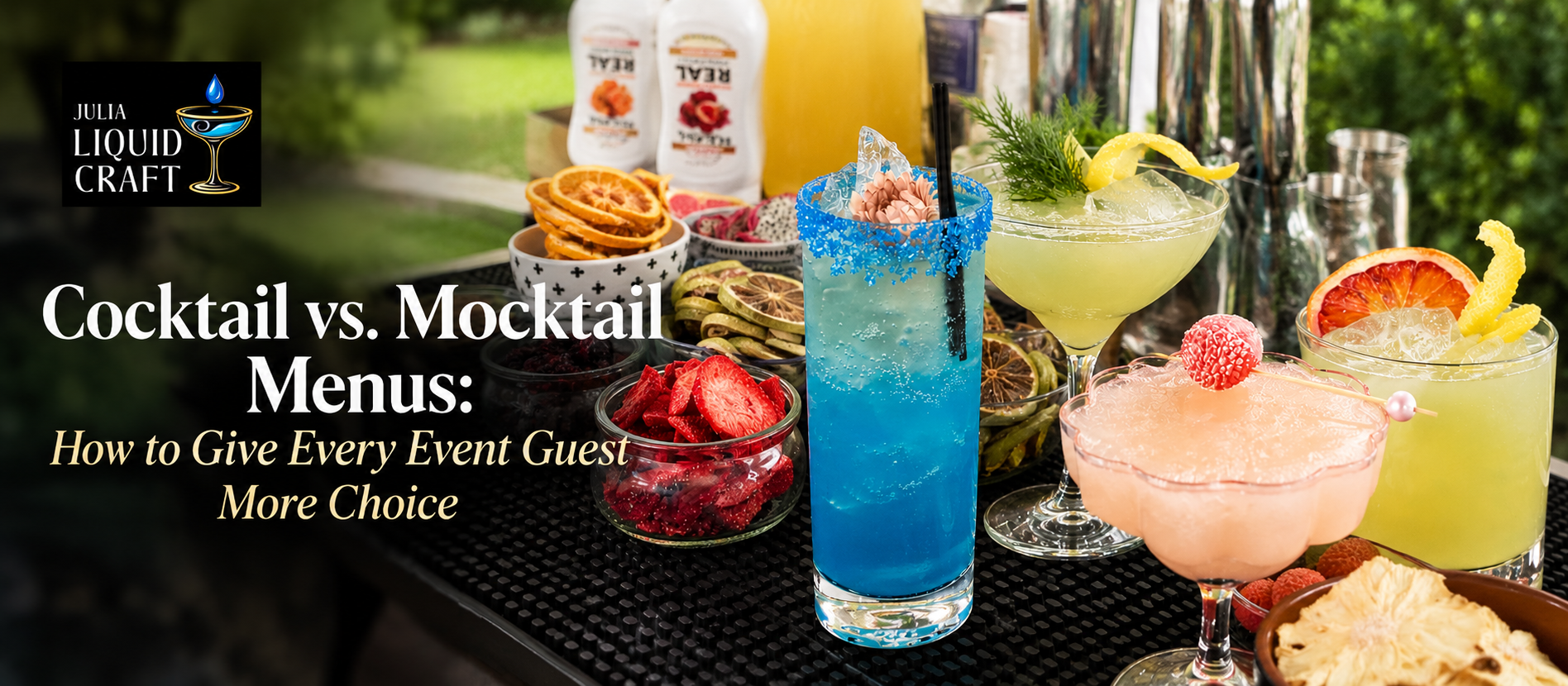
The difference may sound simple, but a good mocktail involves more than removing alcohol from a cocktail. A thoughtfully created mocktail can combine citrus, fruit, herbs, syrups, spices, garnishes, carbonation, and other ingredients to create balanced flavor and an appealing presentation.
Both cocktails and mocktails can be designed around the style of an event. The important point is that guests should have options that feel intentional rather than like an afterthought.
Why Include Mocktails at an Event?
Not every guest wants an alcoholic drink. Some people may be driving, avoiding alcohol by choice, underage, or simply more interested in non-alcoholic beverages.
Offering a well-planned mocktail gives these guests something more interesting than water or a standard soft drink. It also makes the bar experience more inclusive.
For many events, mocktails can be presented as part of the main drink menu rather than being placed in a separate category that receives little attention.
How Many Cocktails and Mocktails Should You Offer?
There is no universal number that works for every event. The right selection depends on the number of guests, event length, type of celebration, menu style, and how the drinks will be prepared.
A smaller menu is often easier to understand and can help keep service moving. Instead of offering many similar drinks, choose options with different flavor profiles.
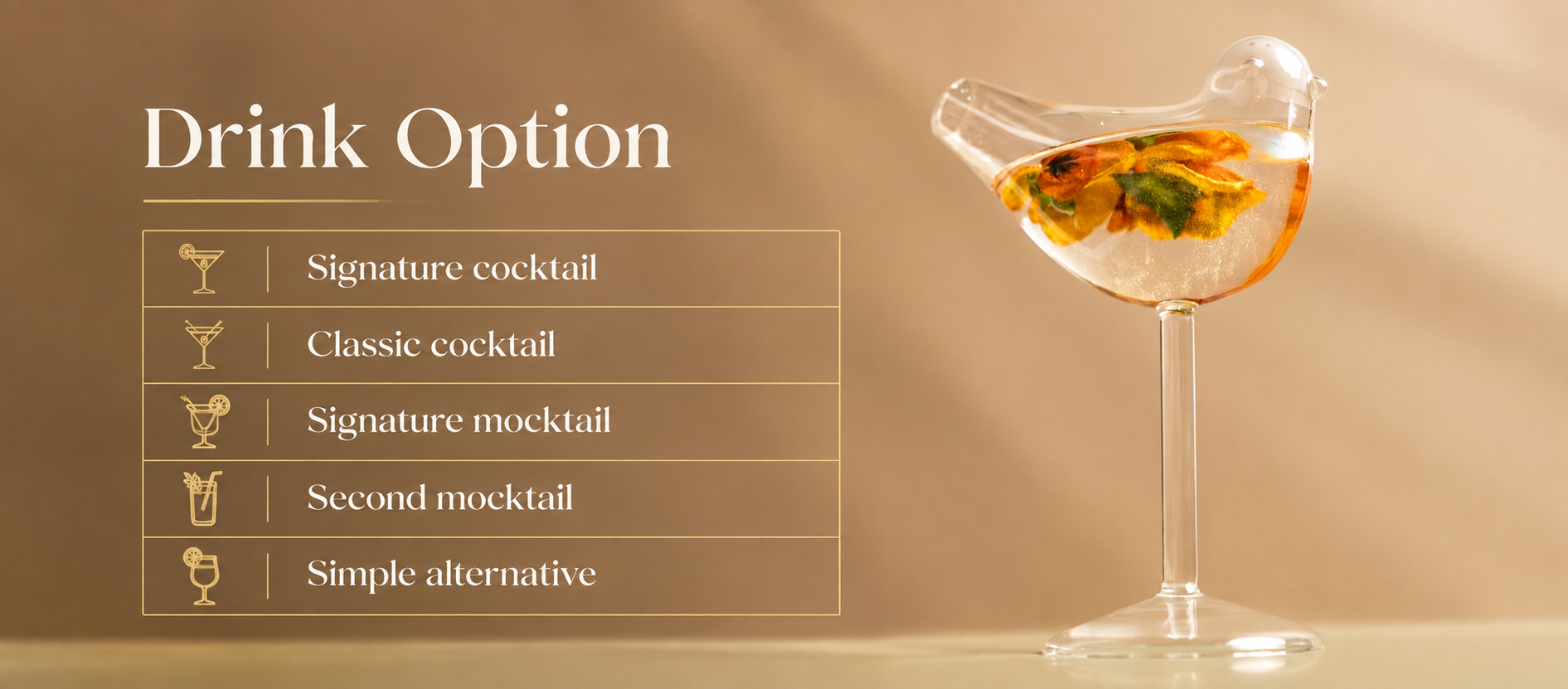
| Drink Option | Purpose | Flavor Direction |
| Signature cocktail | Creates a memorable event drink | Citrus, tropical, herbal, or fruit-based |
| Classic cocktail | Provides a familiar choice | A well-known classic style |
| Signature mocktail | Gives non-drinking guests a crafted option | Citrus, berry, tropical, or herbal |
| Second mocktail | Adds variety | Sparkling, refreshing, or fruit-forward |
| Simple alternative | Provides an easy familiar choice | Light and refreshing |
This structure can be adjusted according to the type and size of the event.
Build the Menu Around Your Guests
The best starting point is not the latest drink trend. It is the people attending the event.
Think about the age range, preferences, event atmosphere, and time of day. A daytime celebration may call for lighter and more refreshing choices, while an evening event may allow for richer or more distinctive flavors.
You should also consider whether guests will be standing, seated, moving between activities, or spending most of the event near the bar. The way people experience the event can influence which drinks make sense.
Create Different Flavor Profiles
A menu becomes more useful when each drink offers something different.
For example, one drink could be citrus-forward, another could feature tropical fruit, and another could have herbal or refreshing notes. This gives guests meaningful choices without requiring a long list.
The same principle applies to mocktails. A non-alcoholic menu does not need to consist entirely of sweet fruit drinks. Citrus, herbs, spices, carbonation, and more complex flavor combinations can create greater variety.
Give Mocktails Equal Attention
One of the easiest mistakes to make is adding one basic mocktail at the bottom of the menu after everything else has been planned.
Instead, think about mocktails from the beginning.
Consider the drink’s flavor, color, garnish, glassware, name, and overall presentation. A thoughtfully prepared mocktail can look just as appealing as a cocktail and can become one of the drinks guests remember.
For a wedding, a signature mocktail could complement the couple’s chosen cocktail. At a birthday celebration, the name and presentation could reflect the theme. At a corporate event, a clean and sophisticated mocktail can give guests a polished alternative.
Make Sure the Menu Works During Service
An event drink menu needs to be enjoyable for guests and practical for the person serving it.
A drink that requires numerous ingredients and complicated preparation may take longer to make when several guests order at once. It is therefore useful to consider preparation time, ingredient overlap, garnish requirements, and consistency.
A professional bartender or mixologist can also help evaluate whether a menu is realistic for the event conditions.
This is where experience matters. A drink may look excellent on paper but still create unnecessary delays if it is difficult to prepare repeatedly during a busy celebration.
Match the Menu to the Type of Event
Different events call for different approaches.
Weddings: A signature cocktail paired with a matching mocktail can create a personalized experience.
Birthday parties: More colorful, playful, or creative drinks may suit the celebration.
Corporate events: Simple, polished choices are often easier for a wider range of guests.
Family celebrations: Several non-alcoholic options may be especially useful when children and adults are attending.
There is no need to copy another event’s menu. The drinks should make sense for the people, setting, and purpose of your celebration.
Common Mistakes to Avoid
Offering too many choices: A large menu can make ordering and preparation unnecessarily complicated.
Treating mocktails as an afterthought: Non-drinking guests should have options that receive the same consideration as other menu items.
Choosing drinks only for appearance: Presentation matters, but flavor and balance matter too.
Using similar flavors throughout the menu: Different flavor profiles give guests more reasons to explore.
Ignoring service practicality: Every drink should be realistic to prepare consistently during the event.
Final Takeaway
A successful event drink menu is not about offering the most choices. It is about offering the right choices for the people attending your event.
Combining thoughtfully selected cocktails with well-designed mocktails can create a more inclusive and enjoyable bar experience. When the menu considers flavor, presentation, guest preferences, and practical service, every guest has an opportunity to find a drink they genuinely enjoy.
If you are planning an event and want help creating a thoughtful cocktail and mocktail experience, Julia Liquid Craft can help with professional bartending and mixology services tailored to your celebration.
Frequently Asked Questions
How Many Drinks Should Be on an Event Menu?
There is no fixed number. A small selection with different flavors is often easier to manage than a long menu filled with similar options. Guest count, event duration, and service style should all be considered.
Should I Offer Mocktails at a Wedding?
Yes. Mocktails give guests who do not drink alcohol a dedicated option and can also be useful for guests who are driving or simply prefer non-alcoholic beverages.
Can a Mocktail Be a Signature Event Drink?
Absolutely. A signature mocktail can be designed around an event’s theme, colors, flavors, or overall style. It can be served alongside a signature cocktail or featured as its own special drink.
How Do I Create a Menu for Guests With Different Preferences?
Choose drinks with contrasting flavor profiles. Combining citrus, fruit, herbal, refreshing, or sparkling options can provide variety without creating an overly complicated menu.
Are Mocktails Just Cocktails Without Alcohol?
Not necessarily. A mocktail can be developed as its own drink with its own flavor balance, ingredients, garnish, and presentation. Removing alcohol from a cocktail is only one possible approach.